Early research questions are often scattered across briefs, recruitment criteria, interview guides and notes. The project connects these steps while clearly labeling simulated material as preparation for fieldwork.
06 — Synthetic Research · UX Intelligence
Synthetic UX
Sharpen research questions with a synthetic cohort before fieldwork.
Try the live demo↗Synthetic UX turns a research brief into a tailored cohort and simulated interviews, helping teams expose assumptions and define what real participants must validate.
A workspace preserving study context, generated artifacts and the hypotheses to test with real users.
Project anatomy
From research brief to synthetic cohort.
The study brief defines the target group. Vector retrieval then selects relevant personas, and a language model simulates their responses to return a structured cohort.
Core pipeline
Select a step to understand how the data is transformed.Selected step
The researcher defines product context, objective, target users, questions and cohort size in the Next.js interface.
Implemented features
Visible capabilities are connected to the technical components that make them possible.Study framing
Product context, research objective, target description and custom questions.
Configurable cohort
The cloud demo offers cohorts of 1–8 personas, up to 10 questions and 2 screens per study.
Target-matched personas
Semantic search across encoded personas stored in ClickHouse.
Individualized answers
Interview simulation in which the same profile can welcome one feature and express concerns about another.
Optional screen analysis
Structured screenshot analysis: hierarchy, visible actions, confidence cues and potential friction.
Traceability
The brief, questions and responses remain linked to the saved study so the origin of hypotheses can be inspected.
Stack by responsibility
Each technology is placed within its role in the system.Next.js · React
TypeScript, App Router and cohort exploration components.
FastAPI · Pydantic
Brief validation, generation endpoint and typed JSON contract.
Sentence Transformers
Target and persona embeddings, batch encoding and cosine proximity.
ClickHouse · Parquet
Float32 vectors, persona metadata and top-N retrieval.
OpenAI · GPT-4o-mini
Persona-level qualitative answers and optional multimodal analysis.
GCS · Secret Manager
Private workspaces per visitor, conditional writes and managed secrets.
What the work establishes
Observed results, key learnings and next product measurements.Observed result
A brief can be followed through a selected cohort, simulated interviews and synthesis. Context and responses remain together in a saved study.
Lesson
Synthetic research gains value from traceable context, assumptions and generation steps.
To measure
Studies and profiles tested, agreement with fieldwork, preparation time saved, latency and cost per study.
Full-stack prototypeBased on the current codebase · Simplified representation
From technology to use
Frame a study and watch the cohort take shape.
Define a target group and research objective, then follow profile selection, response simulation and the emergence of initial findings to validate in the field.
A 30-second film to discover the tool. Current interfaces and features in motion; try the demo with your own inputs. Synthetic UX
Synthetic UX 01 / 05
One study.One shared context.
From brief to synthesis, prepare research in one workspace.
Brief · Cohort · Synthesis
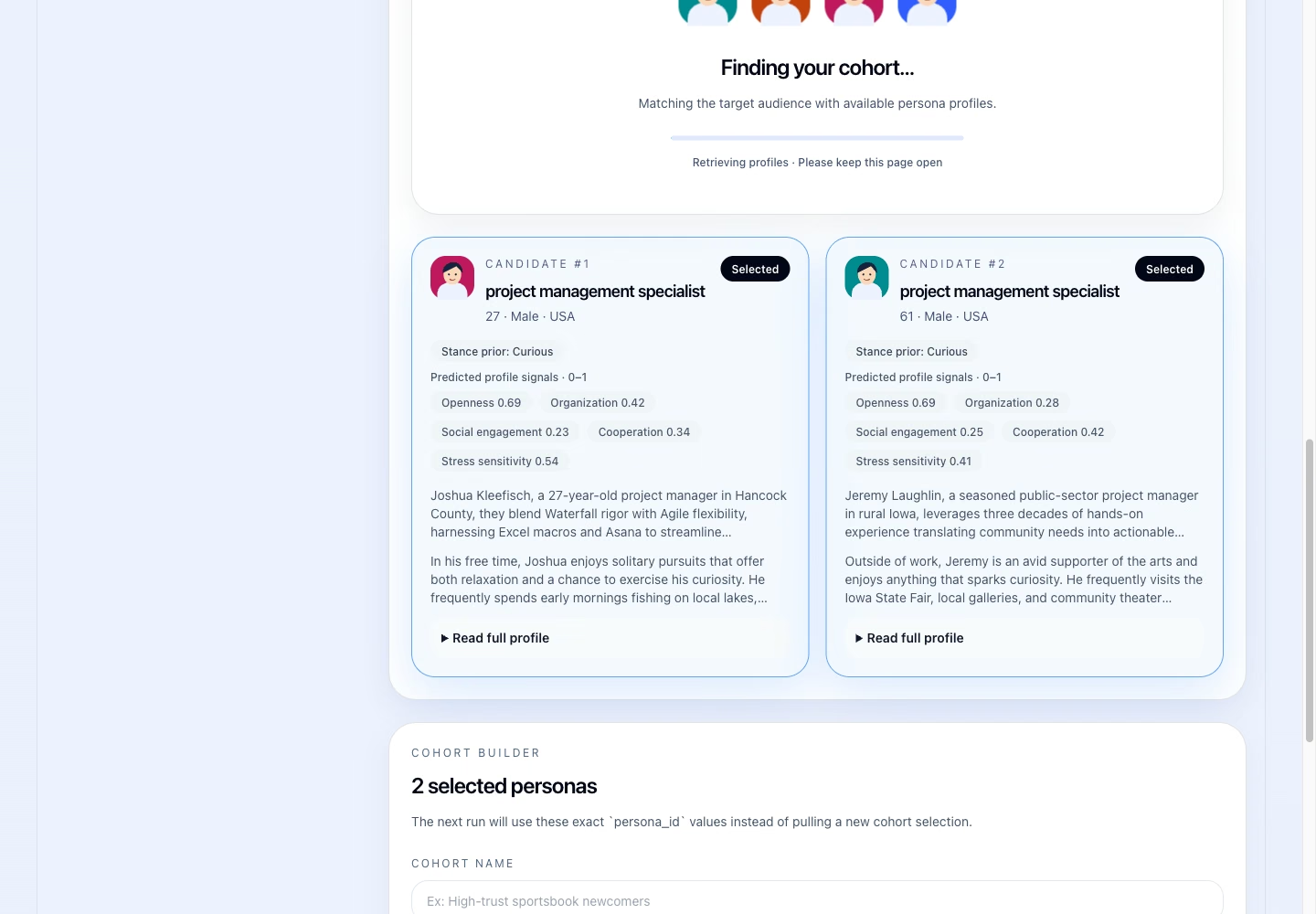
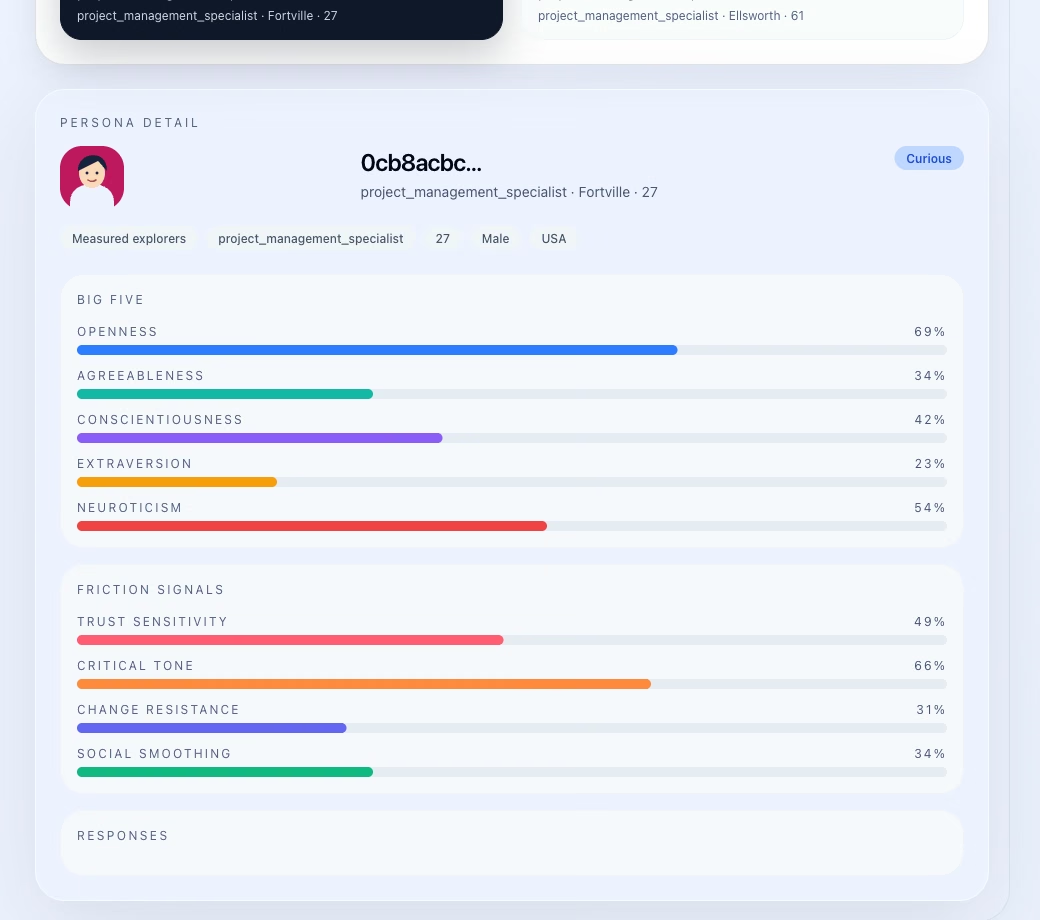
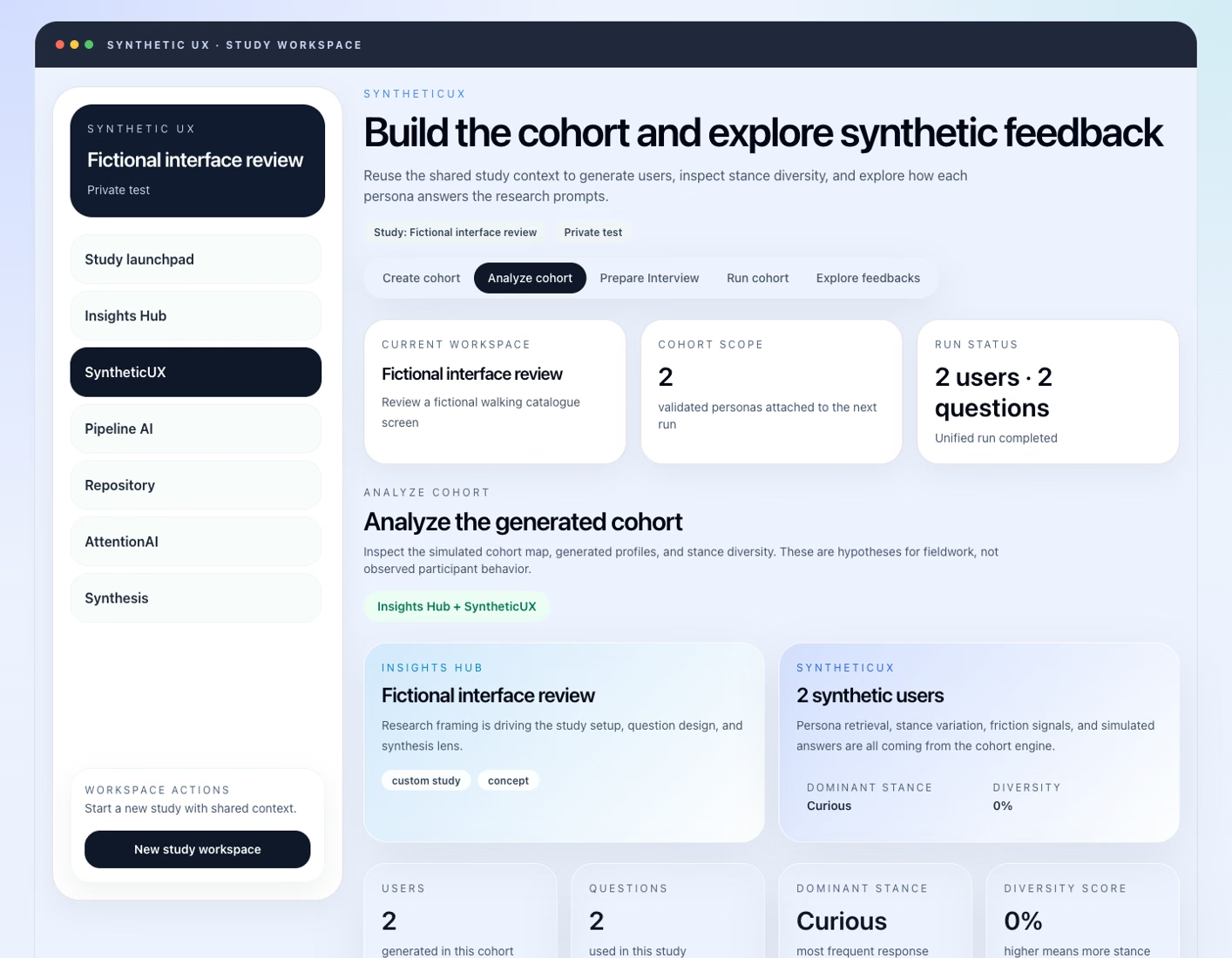
00 / 30s
Current screens · Illustrative motion treatmentTry the application ↗
Film details
Scene 1 · One study. One shared context.
From brief to synthesis, prepare research in one workspace.
Application screen · illustrative motion treatmentScene 2 · Build your cohort.
Retrieve personas and select profiles suited to your research question.
Application screen · illustrative motion treatmentScene 3 · Different profiles. Different perspectives.
Preferences and context shape responses to the project in a simulated interview.
Application screen · illustrative motion treatmentScene 4 · From reactions to hypotheses.
Explore friction and tradeoffs to sharpen your next study.
Application screen · illustrative motion treatmentScene 5 · Arrive better prepared for field research.
Clarify what you need to validate with real participants.
Application screen · illustrative motion treatment05 — OBSERVABLE RESULT
“A saved study connects its brief, selected personas, simulated responses and synthesis in one research workspace”